Thursday, 17 January 2019


Wednesday, 16 January 2019
LFTVD - Stranger Things: Conventions
Conventions:
- High Quality drama
- Multiple episodes, hours, years
- Content can be dark and difficult but innovative
- Time shifting
- Easily accessible
- Attracts some of the best and innovative writers and actors
- More personal
- Challenges the simplistic story lines and stereotypical characters
- Reflection of whats happening - politics
- HBO launched the sopranos in 1999 (to 2007), which was a huge commercial and critical hit
- Increasingly these shows were about the crisis of us identity and *hegemony
*leadership or dominance, especially by one state or social group over others.
Tuesday, 15 January 2019
LFTVD: Introduction Lesson
TV Drama:
L I A R
A N U E
N D I R
G U D E
U S E S
A T N A
G R C T
E Y E I
O
N
- Long Form TV Drama (LFTVD)
> Invested and addicted
- US network broadcasters must satisfy their advertises
- HBO launched in the 1970s (1st cable tv channel)
- Cable channels are able to take more risks with content and form
- Commissioning remains tightly controlled and conservative in outlook
- ABC1 Audience - Big earners
- Channel 4 found foreign language / subtitled LFTVD are rating winners
- Advertising has a big impact on LFTVD
- Social media plays a big role
- Platforms:
> Use of *time-shift is increasing
> Growth of SVOD
- Netflix dominates with 24% of UK market with 5 million subscribers
- Binge-watching started with DVD in the later 1990s
- There has been a move from'water cooler' TV to 'shared universe' fandom
- LFTVD often uses Easter Eggs and mid season breaks to generate intensity and maintain media profile
- Easter eggs - long running jokes hidden in TV shows
> Want to spot them first
> Really invested into the program
- High production value
- Multiple episodes
> Watch when you want
* time-shifting - watch whenever you want
Thursday, 1 March 2018

Wednesday, 28 February 2018
Video Games: Minecraft - Creating Merchandise
Creating Merchandise:
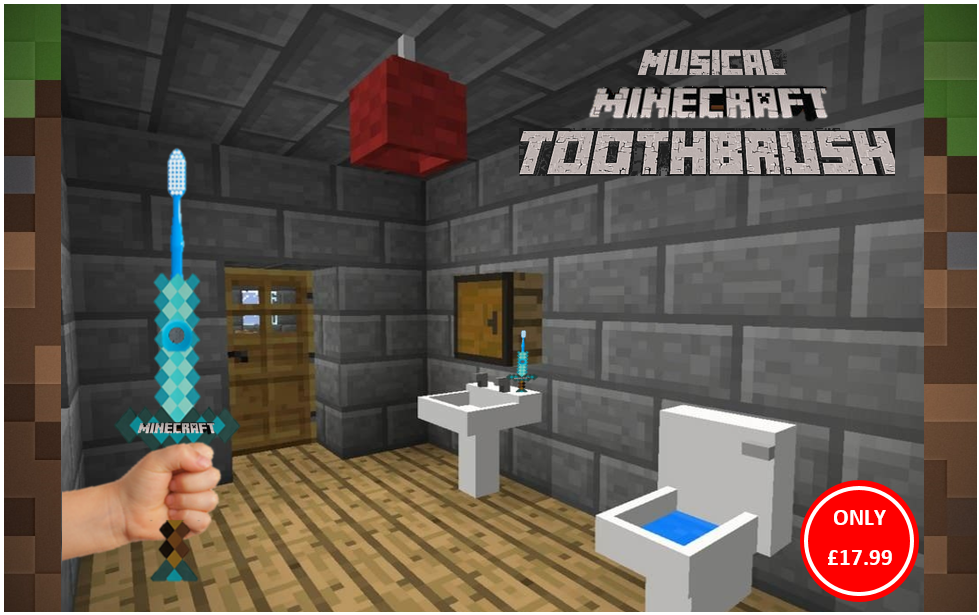
Task: Minecraft are looking to create some new merchandise. Look at previous products and come up with a brand new piece of merchandise. Think about who your target audience will be and create an advert in a magazine showing off your new product.
My product:
Tuesday, 27 February 2018
Video Games - Minecraft: Essay
Minecraft Essay
Write an introductory essay to Minecraft: Explain what it
is, give an outline of the game's history and explain why it has been a
commercial and critical success (Approx. 700 words or 2 sides)
Minecraft is a sandbox computer game created and designed in
2009 Marcus “Notch” Persson and fully and published by Mojang. A sandbox game
is one with an open structure, players are free to explore the game’s environment
and are able to express themselves creatively within the game. Minecraft
players build structures creating a 3D world that some players get lost playing
for hours.
When Notch started Minecraft, in summer 2009, he was on his
own. Notch had to fund the game as well as get it out to gamers. He had created
a basic game, which had elements from other games like Dwarf Fortness and
Infinimer. A month later, he charged people €10 (£8) to download the game,
Minecraft sold 40 copies that first weekend. Every Friday, Persson updated the
game by adding features. In summer 2010, Persson set up Mojang who had worked
at Flash-games developer King.com and Manneh.
Since Minecraft was released back in 2009, it has been a
commercial success. It is currently the second best-selling game ever made as is
estimated that 55 million people play Minecraft every month. The company is
worth around £1.09 billion, due to it being brought out by Mojang in 2014.
There are many reasons as to why it has become such a commercial success since
2009, one of the most important reasons is its growing popularity. Minecraft is
a worldwide game being played in countries like the US, Norway and Australia.
This worldwide success means that there is an increase in sales therefore generating
a larger profit as well as having a bigger availability. Popular forms of
social media such as Facebook and YouTube have also played a significant role
in helping to popularize it and advertising to others to play. Fan account can
be set up to trade ideas and skills or to simple discus the game therefore
creating more of a conversation and social aspect to Minecraft. Youtube has been
another way Minecraft has become popular. Many gamer channels film themselves
exploring the world they have created. This appeals to not only beginner who
can learn the basics and how the game works, but it also appeals to people who
want to start creating more complexed structures and games. These videos have becoming
extremely popular and get over a million views.
In addition to this, another reason for commercial success,
is the spin off games and merchandise created since the release of Minecraft as
well as developments made to the game. Spin off games like “Minecraft,
Education Edition”. This game appeals to a specific demographic, which benefits
the business as they are targeting a wider audience therefore creating more
sales. This brings a fun way of learning to children and influences them to
want to expand their knowledge. It also creates conversation in the playground
and then at home meaning parents are more likely to purchase the game as it has
an educating factor as well as being really enjoyable to play. The merchandise
that is created and sold across the world and promotes and advertises the game.
This is really important for Minecraft’s success as when it was released in
2009 they didn’t have a huge marketing platform so relied on gamers talking
about Minecraft, meaning the buzz was created by conversation rather than the
typical TV advert or bus poster. The game has received millions of dollars in
merchandise revenue from T-shirts to toys. Minecraft has also got its own
convention, Minecon, which began just 2 years after the game was created. The
convention has taken place in places like Las Vegas, Disneyland Paris,
California, London and Orlando which expands their global marketing and
attracts even more customers.
Furthermore, another reason to why Minecraft is commercially
successful is due to its different platforms. Xbox, Windows 10, Windows phones,
Nintendo Wii U, PlayStation and Android phone can all be platforms to play Minecraft.
This creates accessible for a wider audience meaning more people are able to
play. By having such a wide platform to play the game, it creates more sales
therefore making a larger profit. As Minecraft generates more money, new concepts
and ideas can start to be developed. This not only brings in new players but
ensures keeping the current players.
Sunday, 25 February 2018
Video Games: Minecraft - Essay Question Practice
Essay Question Practice:
Q. Explain the impact of
digitally convergent media platforms on video game production,
distribution and consumption.
Refer to Minecraft to support your answer.
Use
Minecraft to support your answer throughout.
Explain the Impact: Tell the examiner about the
importance
Since Minecraft was released back
in 2009, it has been a commercial success. It is currently the second
best-selling game ever made as is estimated that 55 million people play
Minecraft every month. The company is worth around £1.09 billion, due to it
being brought out by Microsoft in 2014.
Digitally
Convergent Media Platforms: Devices that link us to shared content via a
network
Minecraft’s reach has spread to
multiple platforms and can be accessed by Xbox, Nintendo, PlayStation, PC, and
from hand-held devices such as iPads, iPhones, tablets and other android
products. There are various modes which the game can be played on, such as
survival or creative however players have the opportunity to play by themselves
in single-mode or together on multiplayer mode. This encourages individual
creativity as well as teamwork. Players, primarily children, have described the
game as ‘fun’ and ‘creative’.
Video
game production: Creating a Video Game
The
game was initially created in 2009 by Swedish developer Marcus ‘Notch’ Persson,
and it was initially a spin-off of an open source game called Infiniminer, and
eventually, the initial ‘Cave Game’ name was changed to ‘Minecraft’ for its
first alpha release. This independent development style, with regular updates
just simply under ‘Notch’ lasted until December 2010, when the game became so
large that Notch formed Mojang AB, which became the developing company of the
game, and hired staff to aid in the consistent development of the game. Mojang
remained an independent company, and the only publisher of the game up until
September 2014. By then, Mojang was worth many billions of dollars, and was
purchased by Microsoft. Mojang, despite being a Microsoft company still however
exists, and still develops the game as it always did (although there is more
inclusion of Xbox LIVE services), despite the departure of Notch from the
development team around them.
Distribution:
How it circulates, is marketed and is advertised
Consumption:
Audience purchasing the game
Audience
pleasures from playing the game.
Conclusion:

Friday, 23 February 2018
Video Games - Minecraft Timeline
Minecraft Timeline
2009:
April 29th: Infiniminer is released by
Zachtronics Industries, it was regularly updated and became open-source less
than a month later this is where Notch got the inspiration for Minecraft
May 10th: Development on Cave Game started using RubyDung, (an abandoned game project by
Notch), and Infiniminer as a basis for the code
May 13th: Java: First video of Cave Game, block placement, first Mobs
(Humans), physics created.
May 14th: Renamed to Minecraft: Order of the Stone, a suggestion on the Independent
Games Wiki
May 16th: Java: Early private testing among
TIGSource members/
May 17th: First release of the game, shortened to
Minecraft
May 21st: Accounts can now be registered
May 24th: An official Minecraaft Forum is opened
June 1st: Java: First Multiplayer test, Notch
starts new job at Jalbum
June 8th: Java: Multiplayer released
June 14th: Java: Custom Skins released
August 4th: Java: First elements of Survival
August 18th: Java: Introduction of Health
October 22nd: Passwords can now be changed
October 20th: Beginning of SURVIVAL TEST
December 22nd: Hayden Scott-Baron becomes the
Minecraft Artist
December 23rd: Minecraft for Java passes to Indev
development stage
2010:
January 13th: Minecraft passes 100,000 registered users
January 21st: Minecraft can now be gifted to
non-premium players
February 27th: Minecraft for Java passes to Infdev
development stage, introduction of infinite maps
June 17th: Minecraft passes 20,000 sales
June 18th: Java : Seecret Friday Update 1 released. Minecart
system introduced
June 25th: Java : Seecret Friday Update 2 released. Dungeons
introduced
June 30th: Minecraft for Java passes to Alpha
development stage (Alpha 1.0.0), price raised from 5.00 € to 10.00 €, it is now
possible to play on a client window.
July 3rd: Java : Seecret Friday Update 3 (Alpha
1.0.1) released. Redstone introduced
July 9th: Java : Seecret Friday Update 4 (Alpha 1.0.4)
released. Winter Mode introduced
July 16th: Java : Seecret Friday Update 5 (Alpha 1.0.6)
released. Boats and Large Trees
introduced
July 22th: Java : First over-the-internet test of Survival
Mode Multiplayer
July 23rd: Java : Seecret Friday Update 6 (Alpha 1.0.11)
released. Bricks and Slimes introduced
July 30th: Java : Seecret Friday Update 7 (Alpha 1.0.14)
released. Chickens and Music Discs introduced.August 4th: First
release of Survival Multiplayer (Java Edition Alpha 1.0.15)
August 20th: Java : Seecret Friday Update 8 (Alpha 1.0.17)
released. Fences introduced
August 31st: Minecraftcon, a spontaneous gathering of over
50 fans after a call by Notch, is held in Bellevue, Washington
September 2nd: Notch, JahKob and Carl Manneh return from the
trip in the U.S.
September 10th: Java : Seecret Friday Update 9
(Alpha 1.1.0) released. Compasses introduced
September 18th: Java : Seecret Saturday Update 10
(Alpha 1.1.1) released. Sneaking introduced. Minecraft technically becomes
free-to-play for the weekend, due to the login server not working correctly
September 23rd: Minecraft Classic is available again on
Minecraft.net
October 30th: Java : Alpha 1.2.0 "Halloween
Update" released. Nether introduced
December 20th: Minecraft for Java passes to Beta
development stage (Beta 1.0), price raised from 10.00 € to 15.00 €
2011:
January 12th: Minecraft surpasses 1 million sales
January 13th: Java : Beta 1.2 released
February 22nd: Java : Beta 1.3 released
February 4th: "Minecraft - Volume Alpha", the
soundtrack of the game by C418, is released
February 31st: Java : Beta 1.4 released
April 19th: Java : Beta 1.5 released
May 26th: Java : Beta 1.6 released.
June 1st: Minecraft: Pocket Edition is first
shown on a Youtube video
June 6th: Microsoft reveal Minecraft: Xbox 360
Edition at the E3 conference
June 30th: Java : Beta 1.7 "Piston Update"
released
July 1st: Minecraft passes 10 million registered
users
July 30th:
Minecraft T-shirts are made available on Battlefield Heroes for the
30-31 of July week-end only as a form of "neighborly friendly cross-promotion"
between DICE and Mojang
August 5th: Notch receives a 15-page letter from
Bethesda Softworks, threatening him with a lawsuit if he doesn't change the
name "Scrolls" (which is too close to "The Elder Scrolls",
according to Bethesda) for his next game. A little while before this, Notch had
already been warned by Bethesda's lawyers about this problem, and had suggested
a compromise in which he would never put any word before "Scrolls"
September 14th: Java : Beta 1.8 "Adventure
Update" released.
November 13th: Java : "Sound Update"
released.
November 17th: PE : First iOS release (Alpha
0.1.2)
November 18th: MineCon 2011 is held at Mandalay Bay, Las
Vegas, Nevada. Over 4,500 people from 24 countries attend to it. On the same
day, Minecraft 1.0.0 for Java edition is officially released, price is now
20.00 €
2012:
January 24th: LEGO announces that the LEGO
Minecraft project has passed the 10,000 required votes
March 12th: The "Elder Scrolls vs. Scrolls"
lawsuit has an outcome = Mojang can call their game "Scrolls", but no
sequel using this name will be allowed
May 9th: Minecraft: Xbox 360 Edition TU1
officially released
August 2nd: MineCon 2012 is officially announced
on a promotional video to be in Disneyland Paris on November 24–25
September 6th PE : Alpha 0.4.0 released for both iOS &
Android
November 6th: Minecraft gift cards are available
in physical stores in the US. This is the first time Minecraft can be bought
without a credit card
November 24th: MineCon 2012 is held at Disneyland
Paris, France
November 25th: Second day of MineCon 2012.
MineCon 2012 capes released. Minecraft 1.5, also known as "The Redstone
Update" is announced
2013:
April 1st: Java : Minecraft 2.0 announced as an April Fools
joke
April 5th: Minecraft for Java surpasses 10
million sale
July 20th: Minecraft was announced for the
PlayStation 3, PlayStation 4, and PlayStation
Vita. The PS4 edition will be
released on the same day the PS4 gets released for North America (November 15),
and Europe, Australia, and Latin America (November 29)
September 2nd: Minecraft for Java surpasses 12
million sales
November 2nd–3rd: MineCon 2013 is held at Orange
County Convention Center, Orlando, Florida
December 13: Minecraft for Java surpasses 13 million sales
2014:
April 24th: Minecraft Realms is launched in the
United States
May 6th: Minecraft Realms is launched in more
countries in Asia and Europe
May 9th: Minecraft Realms is launched in the
Oceania region
May 19th: Minecraft Realms is launched globally
in all remaining countries
September 15th:
Mojang and Minecraft are acquired by Microsoft for $2.5 billion
2015:
March 12th: Minecraft: Console Edition wins a
BAFTA Games Award in the family category
March 28th: Minecraft wins a Kids' Choice Award
for "Most Addicting Game"
March 30th: Minecraft for Java surpasses 20
million sales
July 1st: Minecraft wins the first ever BAFTA
Young Game Designers Hero Award
July 4th–5th:MineCon 2015 takes place in London
July 4th: MineCon receives the Guinness World
Record for Largest Convention for a Single Video Game
September 3rd: Minecraft is nominated for a
Golden Joystick Award in the Best Family Game category
December 7th: Minecraft announced for the Wii U
2016:
February 2nd: Minecraft: Story Mode is nominated
a Kids' Choice Award for Favorite Video Game
June 2nd: Minecraft is sold for all platforms 100
million times and makes the second best selling games
June 27th: Mojang announces Minecraft: The Movie,
the release date for the movie is May 24, 2019 and in 3D and in IMAX
November 1st: Minecraft: Education Edition
officially launched
2017:
February 2nd: Minecraft: Story Mode is nominated
a Kids' Choice Award for Favorite Video Game, for the second year in a row
May 11th: Console : Minecraft: Nintendo Switch Edition
officially released
August 22th: Minecraft: Story Mode released on the Nintendo
Switch
September 13th: Minecraft: New Nintendo 3DS Edition
officially released
Minecraft hits 74 million active players and 144 million
total sales
Monday, 5 February 2018
Making Radio 1's breakfast show with Nick Grimshaw
http://www.bbc.co.uk/academy/articles/art20170619095219011
- What are the different responsibilities of presenters and producers?
The produces meet up and organised what they are going to do depending on the celebrities/guest coming in. Want to make the most of the time they have with that person. Deal with the guest, what is to be said and what can't be. Also checking the volume and clarity of the show. Presenter has that interaction with the guest and ensure all questions are asked and covered. Allows contribution from all and what interests both the presenter and producers. The bosses don't make it all about numbers and stats more about the show being real and appealing.They understand that not every show will be great, it depends on whats happening and who is on the show. Its about what the audience wants.
Music team picks the music and programs it so the same song isn't played everyday, its all pre-recorded.
- What preparation that goes into each programme?
Looking what has happened throughout the day in order to plan for the next day/show. Need to create the script, it isn't a word for word script but it is an outline of what needs to be talked about, but its flexible. It then gives them a structure as to when they talk about it and for how long. Depends on who the guest is or what the game will be. Always thinking what can be put on the radio and what to include. See what guest are around, who they want and sometime people approach them and ask to be on the show. Look at what shows/films are coming out.
- What's most challenging and most enjoyable about working on the show?
Sometimes have to deal with challenging guests but they normally don't keep them on for long. Get to learn from each others and understand why others did it they way they did. The way they get along means that they get to be professional but also want to come into work. Freedom in what they get to do. Constantly taking in a Whatsapp chat on what they are interested in rather than being made to talk about something they don't enjoy.
- What are the team dynamics like?
- How can you break into radio?
Thursday, 1 February 2018
TASK: Go online and have a look at the BBC radio programmes
on offer today – Look at Radio 1 through to Radio 6.
• Which programmes are most clearly fulfilling their PSB
remit?


 |
|
BBC Radio 1: Under 30s, younger audiences who keep up with what’s current at the moment
BBC Radio 1 Xtra: Young listeners who like to listen to new
music as well as live music rather than recorded songs
BBC Radio 2: Age groups of 35+
BBC Radio 3: People from different ethnic backgrounds who
have a wide range of music tastes
BBC Radio 4 Extra: Appeals to really young audiences (under
10)
BBC Radio 5 Live: Sport fanatics
BBC Radio 5 Live sports extra: Similar to BBC Radio 5 Live,
the audience is mainly sport fanatics
BBC 6 Music: People with a wide range of music taste dating
back to the 60s
BBC Asian Network: Appeals to British Asians
Friday, 19 January 2018
Jungle Book Essay - Marketing/Circulation
Essay on
Marketing/Circulation
Disney is an important diverse
business that has significant impact on the industry and audience as they
deliver varying content that appeals to a wide audience, this is because Disney
is a conglomerate and has lots of different themed films on offer to appeal to
different types of audiences for example Star Wars appeals to a more male and
older age group compared to Cinderella and other Disney princess films that
appeal to young children and families. Furthermore, Disney is also a
conglomerate franchise that offers products and services that vary for example
films, theme park holidays etc.
Jon Favreau marked the jungle
book, first of all with a trailer on Instagram of only 7 second. Provided first looks at
Mowgli and the rest of the characters, as well as the first listen we’ve had at
the voices being given to them. It’s mostly structured around Sheer-Kan. telling
Mowgli that she knows what he really is and promising to keep him safe. Lots of
animated animals fight, run and jump throughout the whole thing, which ends
with Baloo whistling a recognizable portion of “The Bear Necessities” from the
classic Disney movie. They also used around 10 different posters all of them
having different aspects of the movie such as one large poster with all the
characters, which then could be turned into 3 different posters separating the
characters. They also have individual posters with the characters being alone
and facing the camera. Jungle book was also aimed at a more male oriented audience to beat the
stereotype of a Disney film. They did this by showing the action packed trailer
at the super bowl to try and capture the male audience.
Disney and the director Jon
Favreau have done a spectacular job of realising their new version of The
Jungle Book using the sort of sophisticated digital effects familiar from Life
of Pi. He introduced the film at D23 Expo film festival, the annual Disney expo where they reveal all their new
and oncoming films set to release this year and the following year. It was introduced with company partnerships as well for
example Kenzo and the Hispanic television
network, Univision, who discovered that Spanish audiences will often purchase
cinema tickets in groups. Therefore, they paired up with Disney to integrate
some of the new Jungle Book characters into the regular programming on
Univision, such as integrating them into the channel identification screens and
into talk shows, etc.
Overall, the 2016 re-make of the
film took on a much darker, and realistic art style, and also veering on the
side of caution, by deciding to integrate some more scarier scenes, such as
using the rather deep-voiced Idris Elba to voice Shere Khan, to create this
type of sense. Because of this, Disney
can attract a much older audience to the film.
Disney circulated professional photographs of
actors posing with their onscreen counterparts, largely over social media, in
order to create conversation about the upcoming Jungle Book remake. These
images also added emphasis on the star-studded cast which Disney were so
desperate to promote. This was done in order to create more attention
surrounding the popular actors, (such as Scarlett Johanssen and Idris Elba).
The
poster from the 1967 film is a lot brighter and more colourful, as their
attention was for making the film towards a younger target audience. However, in
the 2016 poster, the characters appear much more realistic and have more
serious faces also the whole poster is a lot darker and there are more shadows,
this makes the film seem more appropriate for an older target audience which is
what Jon Favreau wanted to do.
Rudyard Kipling was born in
India and he spent six years of his adulthood there. Also, he spent the first
six years of life in the Indian subcontinent. Jungle Book is set in India as a
part of the context. The original film was releases in 1967.
The
Disney vault is a policy in which Disney put some of their best films in a
vault
Conclusion
To conclude, marketing has obviously changed. You could
argue that with its licensing deals with Kenzo and its focus on aggressively
targeting a secondary audience to build profits on the back of a family
audience who always turn out for Disney films you could argue that Disney have
grown smarter and more precise with their planning, however we must also not
forget that there are still lots of similarities between the two eras, for
example the use of stars and red carpet premieres to promote a film remains in
place as does the creation of character posters and trailers as the fundamental
basics of Disney marketing so to me what
is forgotten is that Disney as a
conglomerate have always been a master at marketing, it is why they are the
number one entertainment conglomerate in the world and yes some of the practices have changed but
the whole reason why there was new version of The Jungle Book in the first
place was because of the success of the first film, a success driven by an
effective marketing campaign.
Subscribe to:
Posts (Atom)